War Winter Quarter is Over!
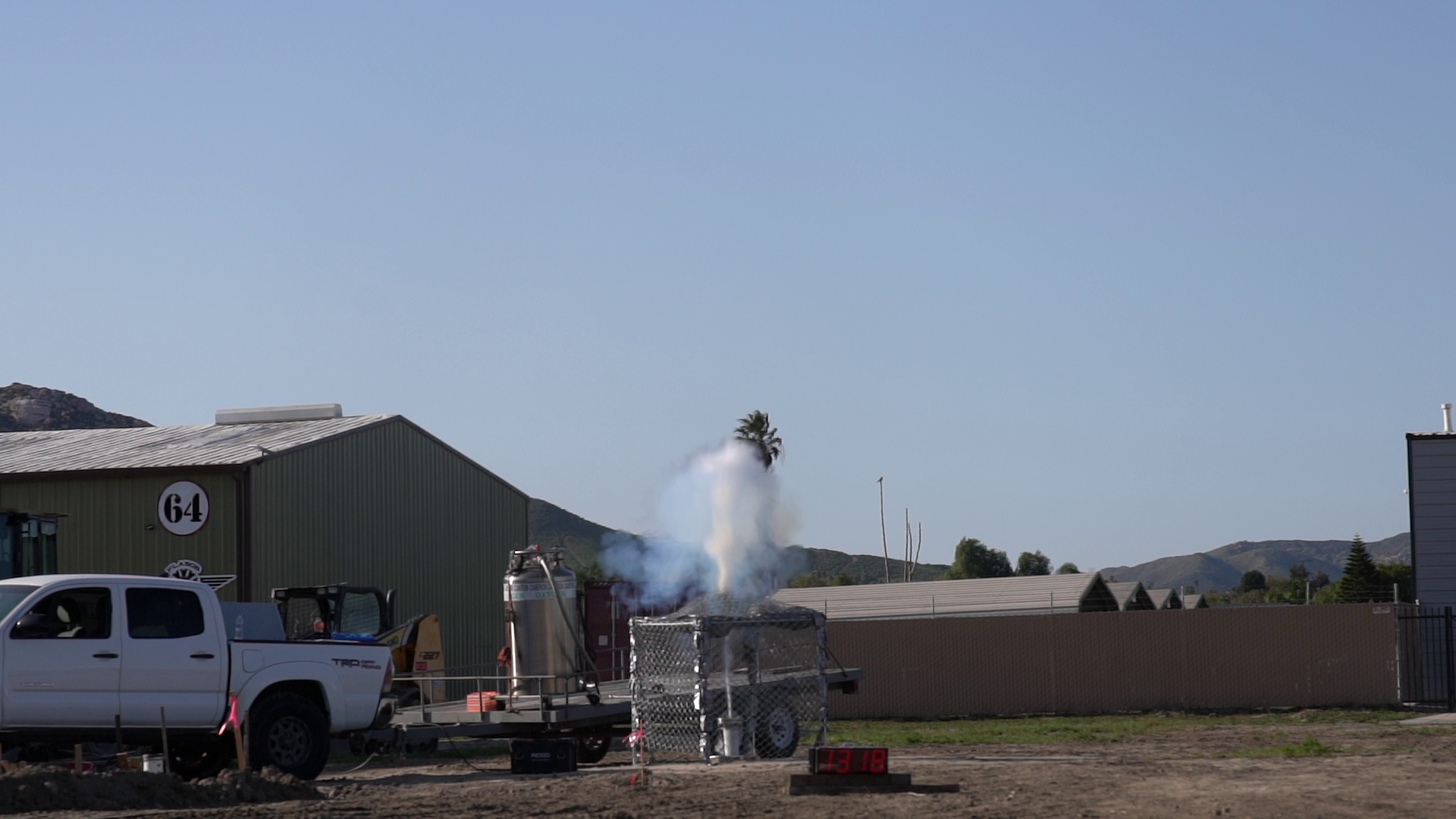
And with that, my last winter quarter has come to an end. These past 10+1 weeks may have gone by in a flash, but they were also some of the most productive and enjoyable of my undergrad thus far. Getting this site to a publishable state is perhaps one of the nicer perks of having ample free time in my schedule, aside from the much needed physical outings and weekend trips. But the numbers speak for themselves: this quarter I was able to attend 3 conferences, took over 800 pictures, gave manufacturing training to 80 students, performed hotfire attempts on 2 different engines for 2 different test stands, and went to my first concert.
I was able to stress test a different side of my time management skills as I leaned more heavily into the project based learning pedagogy, splitting my time between chemical propulsion with NILE & Lotus and electrical propulsion via PEPPR.
Winter Quarter Projects and Updates
Chemical Propulsion
Blue Grass and Stratum — At the start of this quarter Stratum saw its 9th and 10th successful hotfires on the blue grass test stand, successfully proving the Barske Impeller E-Pump that my team and I have been developing: a collegiate first. This year-long test campaign has been particularly special to me as I personally helped design this engine and have since had a hand in every test its undergone. A large majority of the learning that I have done in college has been outside the classroom and inside that propulsion laboratory, and to see the completion of this campaign is a great joy.
Now that we have some time, and funding, my team and I are looking into making improvements to the test stand to make it safer, easier to modulate, and more reliable. We also are going to resume work on our torch igniter and shift focus to testing for the liquids side of Archerfish.
NILE — With the test site at the Paso Robles Spaceport nearing completion, we were able to deliver the NILE test stand and begin testing for both coldflows and — as of last Tuesday — hotfires. I've previously been privileged by Cal Poly's propulsion lab to not have to deal with the logistical stress of coordinating off-campus propulsion testing. While the procedures associated with reserving site access and clearing everything with our associates at the spaceport are certainly more time consuming, learning how to interface with everyone and create plans weeks in advance (while still meeting deadlines) has been enjoyable.
This test campaign has also been an excellent opportunity to learn the true rigor and forethought that must be put into writing procedures. A new test site and new test stand make the perfect opportunity to rethink safety and ensure that everything can be written out to the extent that people unfamiliar with the system can operate it safely. The other great challenge faced is of course timings between propellants, but my optimistic disposition says we’ll figure that out with a few tests.
Lotus — Recency bias is definitely playing a part in my pride for this project, but going from design to print in three weeks on a solo propulsion project is not something time can ever make me less proud of. Unfortunately, due to weather causing issues with the cooling system of the PBF machine’s laser I was only able to print half of the TCA for Lotus before the end of this quarter.
This project has truly been so much fun to work on. There have been multiple occasions where I've happily spent the entire day bouncing between RPA and CAD, or scrolling through documentation to confirm that stainless steel is a viable regen material. Perhaps the most interesting and unexpected product of this project has been the advice received from alumni I've gotten in contact with: much if not all prior experience with regenerative engines at Cal Poly had failed to be passed down before graduation, but everyone I've contacted has been so helpful and supportive that I have no fear of that knowledge being lost.
Electric Propulsion
Having received the news that PEPPR would officially be recognized as a club next year, we were primed for success from the start of the quarter: from solving issues with the Pocket Rocket to submitting research papers, winter quarter was full of progress. Most of my time in the lab this quarter was devoted to testing the hollow cathode, which had previously been stalled by vacuum issues with Big Green. While we couldn't identify its leak until the end of the quarter, we were able to relocate cathode testing to ELI, which could not only get us to turbopump levels of vacuum but also had enough electrical feedthroughs to accommodate the test setup. Much to our dismay, while the heater did seem to offgas when current was supplied, no light could be seen from the cathode, leading us to fear the worst.
As we reconsidered our next steps with MIXI, focus was shifted to the RFET Pocket Rocket. We found that the RF feedthrough on its chamber was damaged, causing the issues with reignition. We were not only able to get it to relight with argon and collect preliminary voltage sweeps with an improvised Langmuir probe, but also found that this thruster was capable of producing plasma using atmospheric air as a propellant inlet, potentially suggesting its applicability for VLEO cathode applications.
2026 Liquid Propulsion Symposium
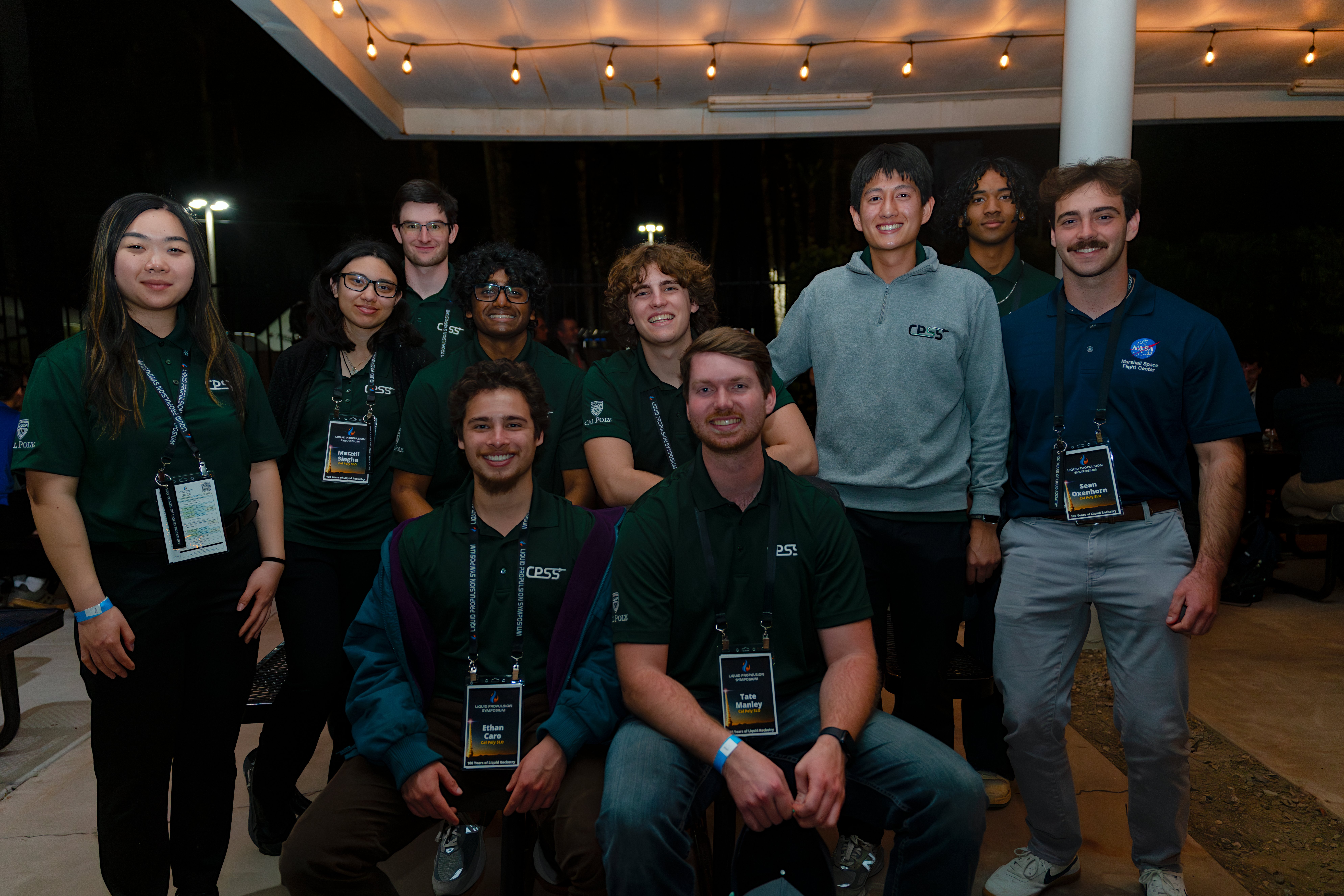
At the start of february I was able to attend my first Liquid Propulsion Symposium, the third annual conference held to recognize ameature liquid rocketry teams, innovators, and enthusiasts. I attended with members from my university’s team Cal Poly Space Systems to present our progress on Archerfish, participate in workshops, network with out universities, and meet some of our heroes (apparanly very popular “aerospace adjacent” youtube influencers). Going into the conference, I didn't really know what to expect: it was the first year our organization had attended, and the most I had gleaned from the programming beforehand was the catering options. I can safely say that this conference was one of the most concentrated gatherings of aerospace talent I have ever been a part of, from C-suite members of key companies such as Firefly, Stoke, and Relativity to the ambitious collegiate teams from other universities.
The project expo served as an eye opener to just what is possible at this level, giving me goals to achieve pre-graduation and inspiration for projects to start immediately (like lotus). In between amazing demonstrations and keynote speaker from the likes of evidently eccentric firefly aero ceo Tom Markusic were informative workshops on topics such as oxidizer safety, fluid system design, controls for hoppers, and the deep lore behind industry favorite valves and a new super perfect alternative that you should buy from us right right now.
Overall this experience gave me back so much more value that I expected, for the low low price tag of $25 this symposium was an absolute steal and something that I would love to attend for the remainder of my stint in collegiate liquid propulsion.
Seedlings of Intercollegiate Collaboration
After a lovely chat with professor Frank Chandler from my sister school Cal Poly Pomona at the aforementioned 2026 LPS, I began reaching out to CPP’s liquid rocketry and additive manufacturing teams in hopes of getting the ball rolling on some technical collaboration. About a week later a representative for the Student Electric Propulsion Consortium reached out to my research advisor and helped me connect PEPPR with the greater undergrad EP community (eventually leading me to contact more people at CPP regarding EP).
These two communities have since been amazing resources for me in both developing and leading my on campus organizations, it goes without saying that when you pull from a bigger pool and have more data to consider that your vision expands.
I also think that finding myself in community with those who share my passions has not only motivated me to dig deeper for more ambitious projects, but also inspired hope for my future and the future of my industry. In a somewhat poetic way, the few who are so ambitious, accomplished, and competitive are those who I'll be working with postgrad — and at a campus like mine, it's all too easy to forget that. Fortunately, I have two remaining years with these communities, and I'm certain I'll be able to elevate not only my own involvement, but also my campus' presence in these amazing aerospace fields.
Goals for Next Quarter
Most of my goals for the next and final quarter revolve around making progress on projects: hotfiring engines, developing PEPPR’s first HET, launching archerfish, and maintaining communication with counterparts at other uni’s to name a few. But aside from engineering projects, I hope to make progress on my backlog of videos to edit and get up some form of photograph portfolio to help with the influx of senior photo requests.
Thanks for reading my updates from this quarter, I’m ever grateful for all the opportunities I’ve been given and have nothing but a big goofy grin for what shall come in the future.