Summary
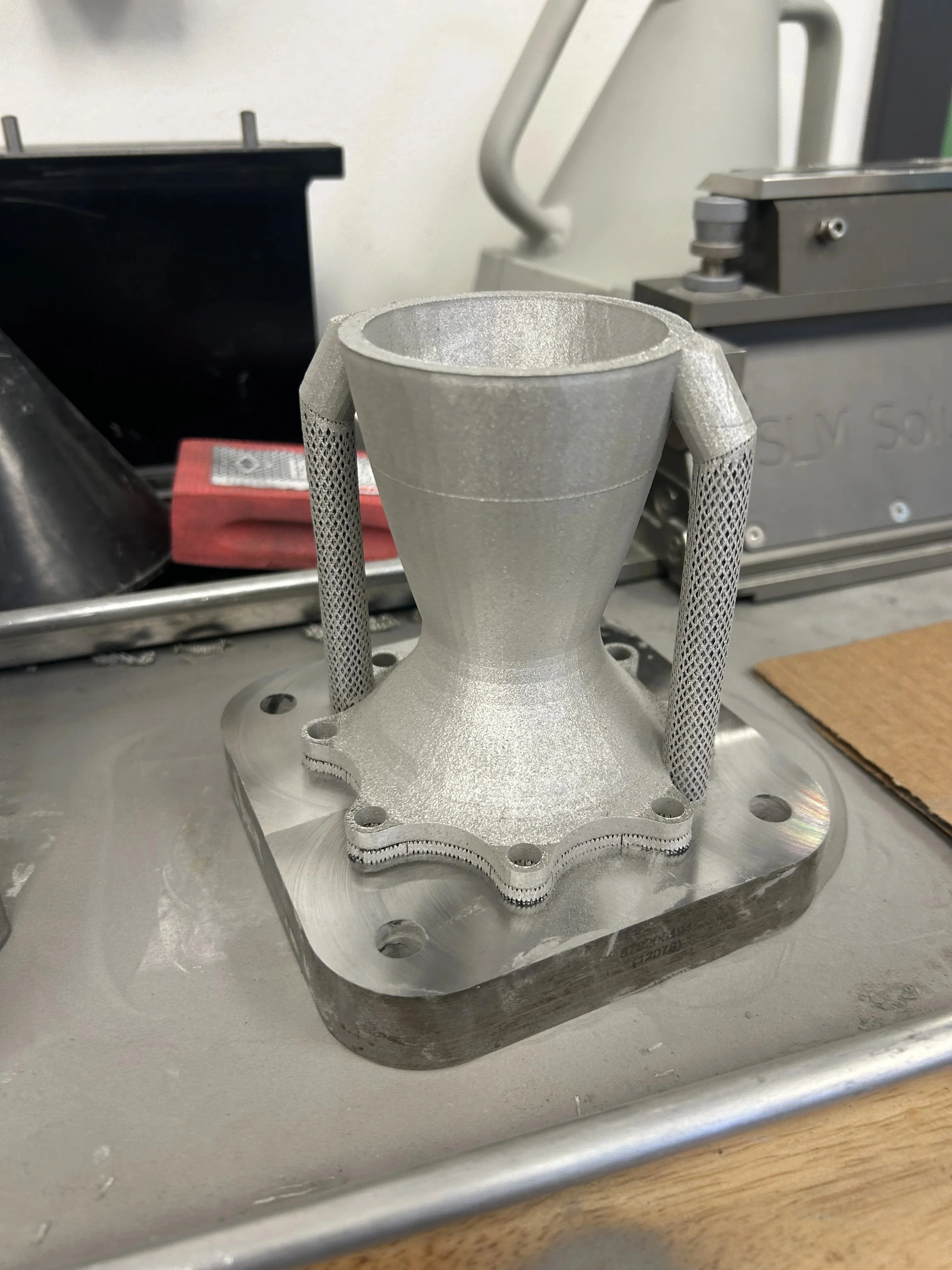
What do you get when you give a metal printer to a rocket scientist? Well, I'm not sure, but when you give one to an aerospace engineering student with too much time on their hands you're bound to get a Regeneratively-Cooled Engine. After about a year of training on CPSLO's SLM125 I began the first prints of my engine series Lotus.
Lotus is a personal project to challenge and expand the design skills I have developed so far, taking full advantage of on-campus additive manufacturing to produce complex internal geometries that would otherwise be unmanufacturable. Having direct access to the printer as "owner/operator" provides a significant advantage: unlike other university teams that must outsource production overseas, pay exorbitant prices (up to $20,000), or rely on rare partnerships, I am able to iterate rapidly, refining each design cycle and letting Lotus grow.
Details
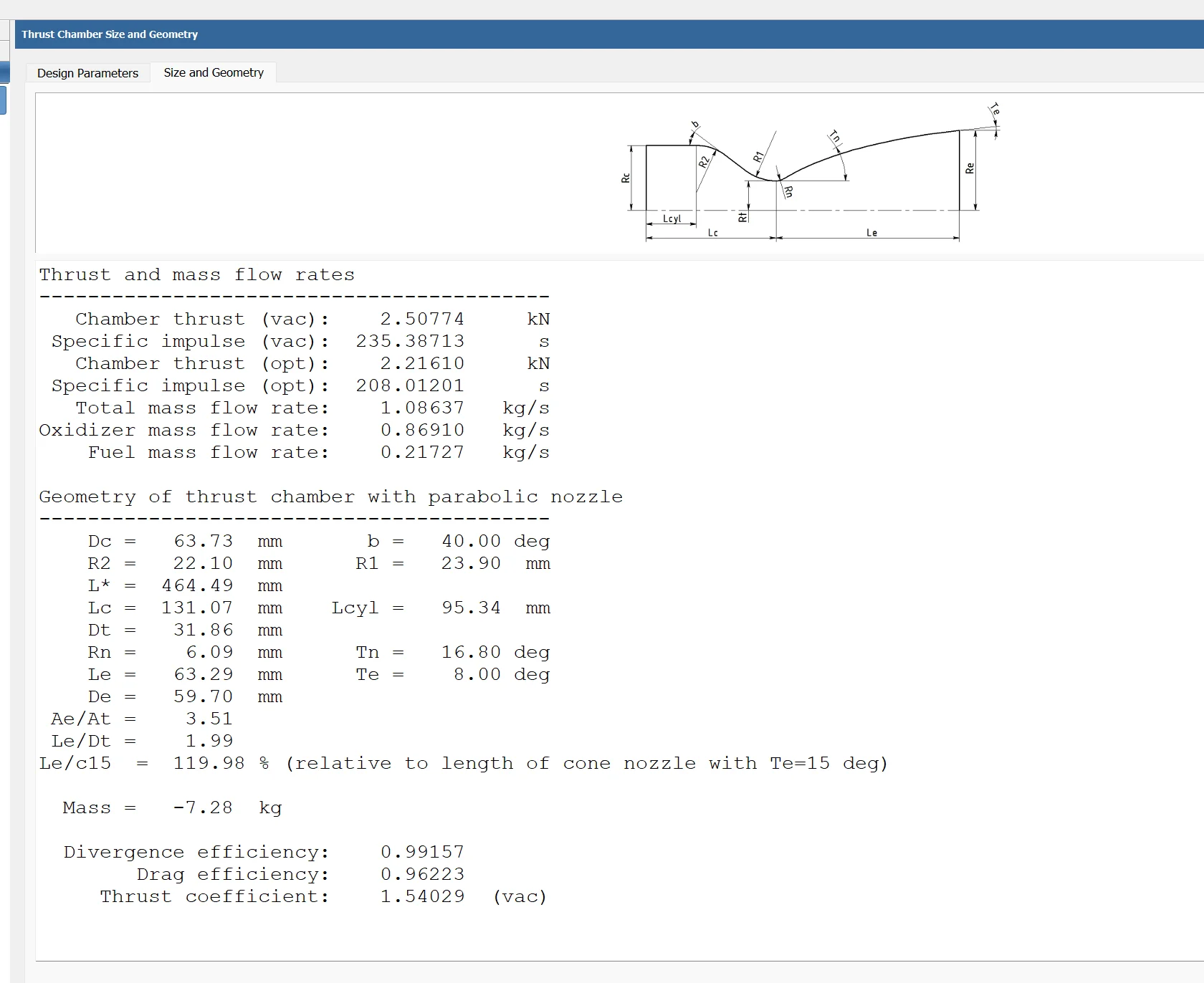
Thrust: 500lbf
Mass Flow Rate: 1.1 kg/s
Oxidizer/Fuel Ratio: 4.0
Chamber Length: ~195mm
Throat Diameter: 31.86mm"
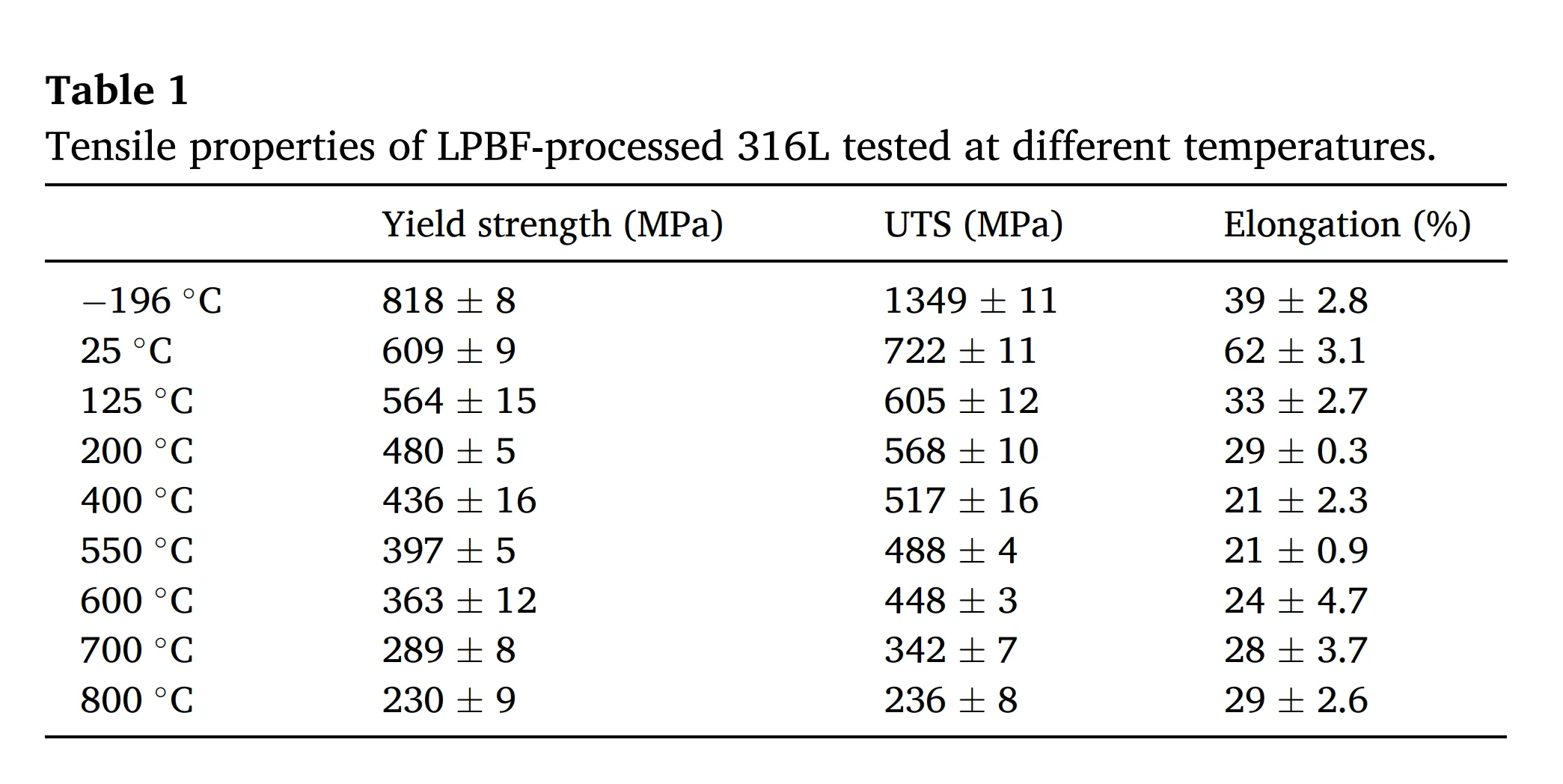
Material: 316L Stainless Steel
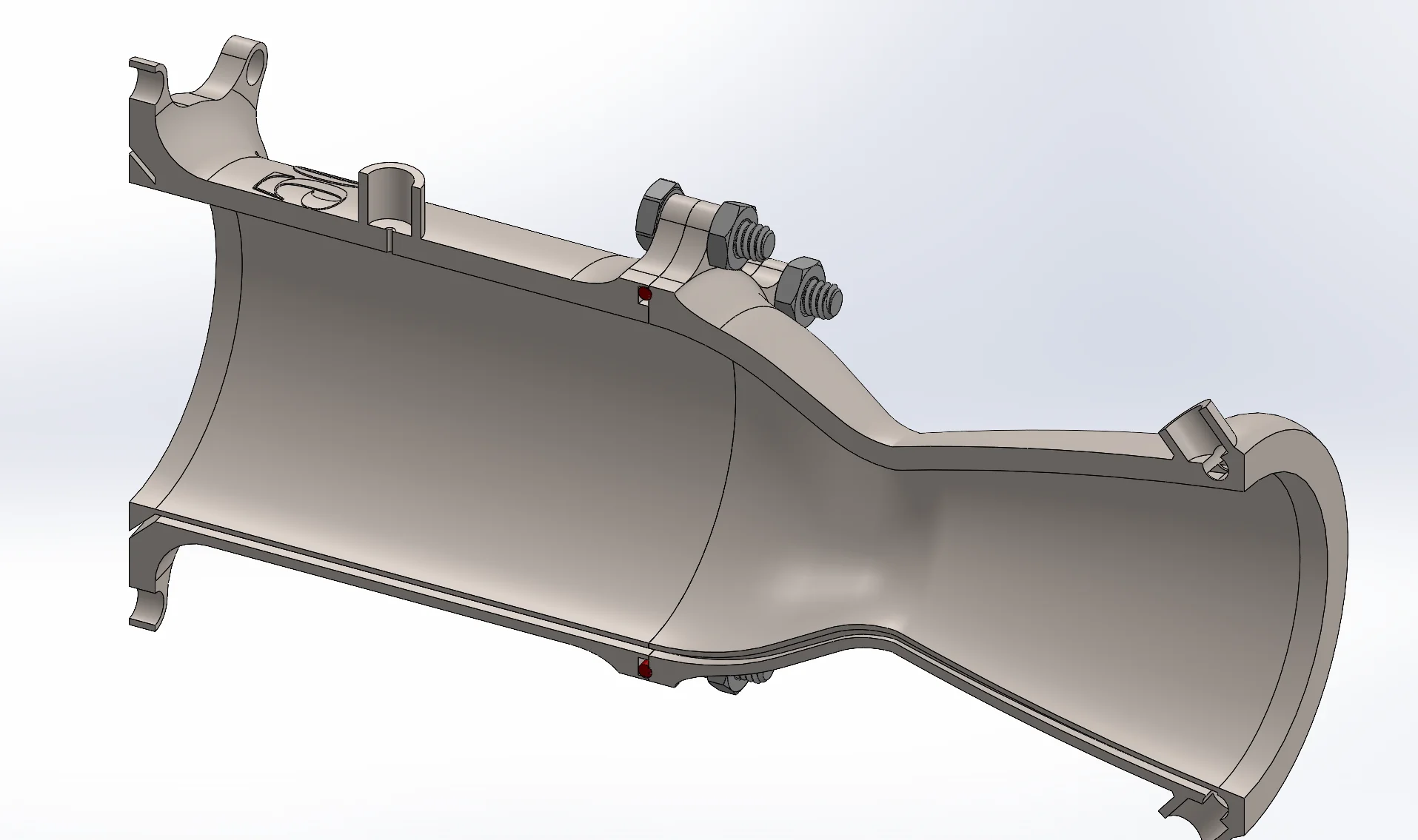
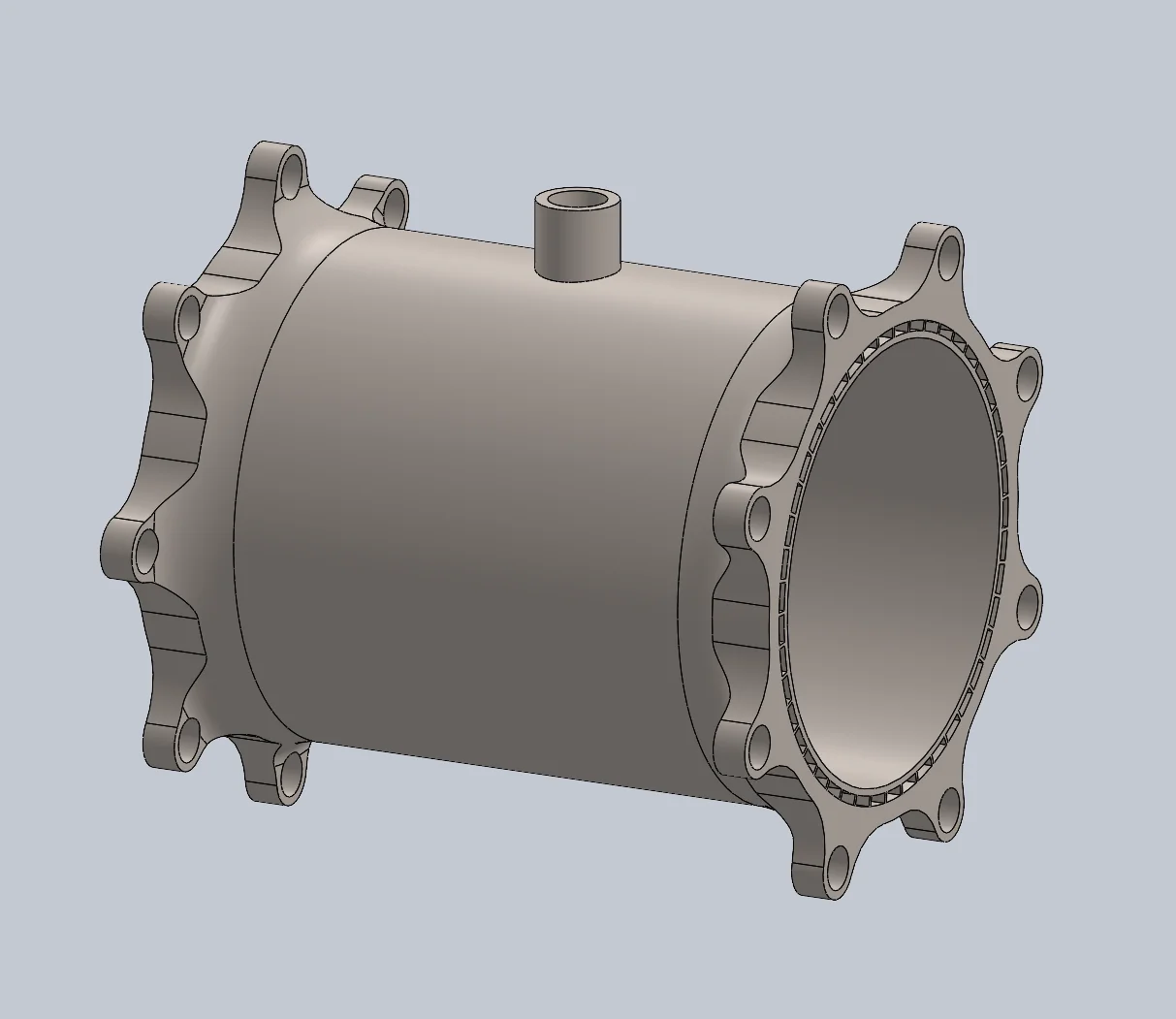
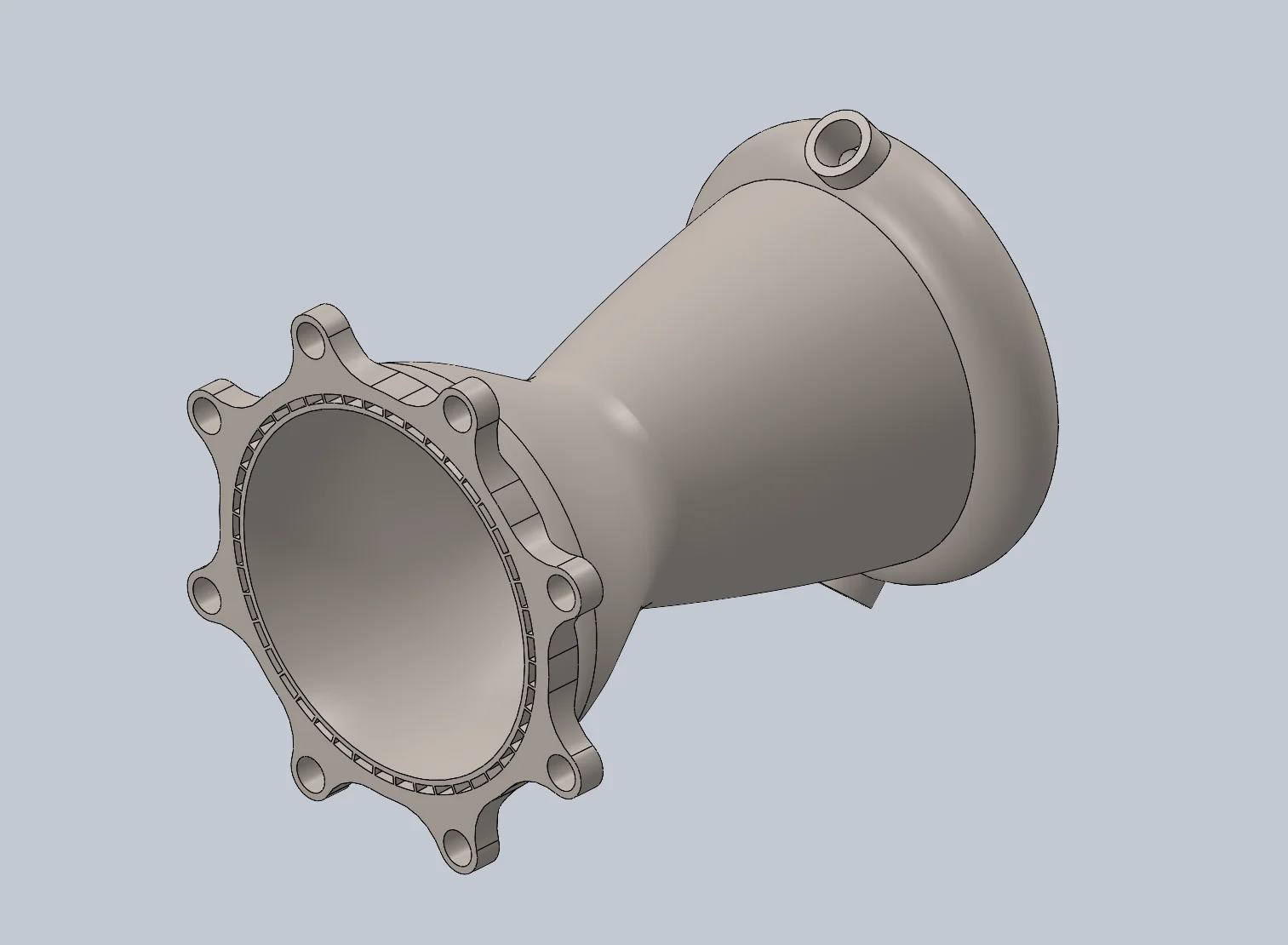
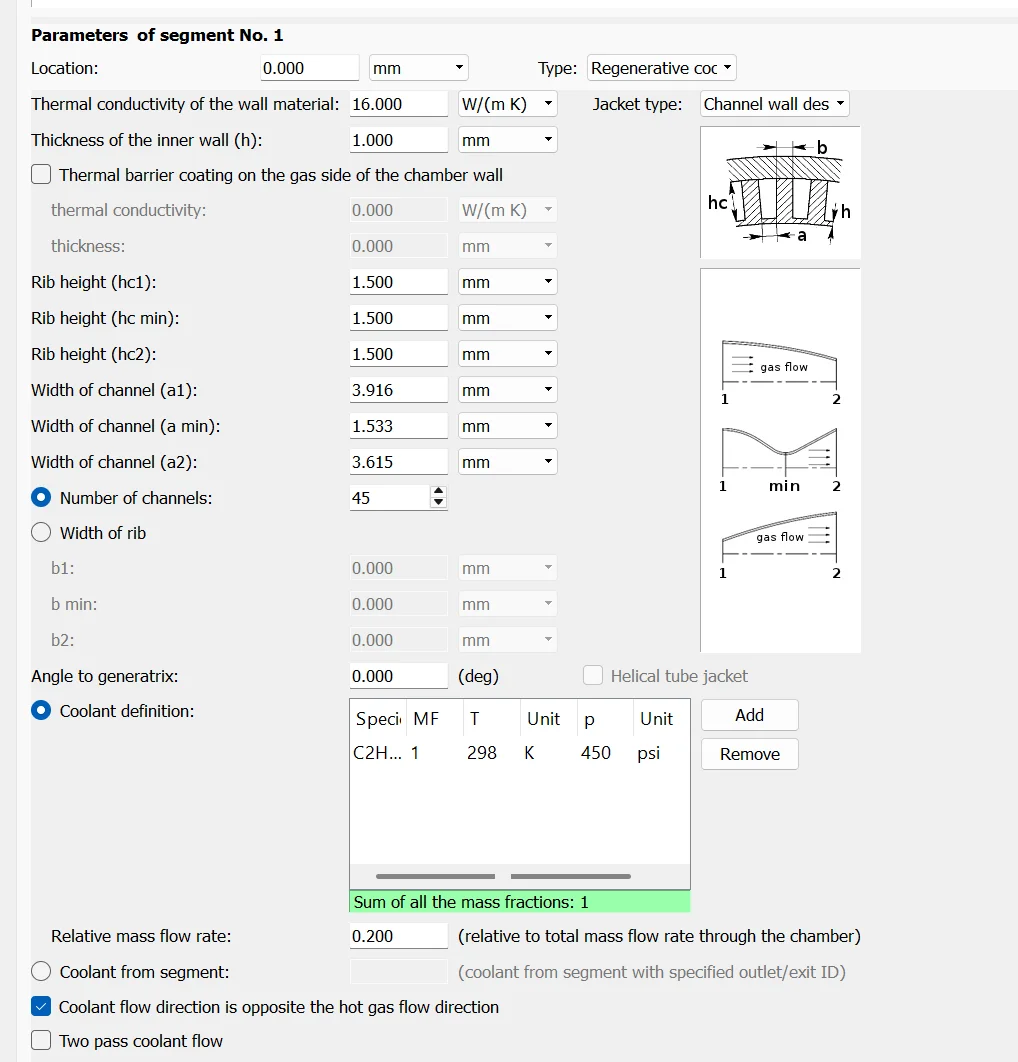
Number of Channels: 45
Film Cooling: 5% of M_dot_fuel
Injector Style: Impinging Unlike Doublet (then Pintle)
Injector Elements: TBD
Oxidizer Hole Diameter: TBD
Fuel Hole Diameter: TBD
Process
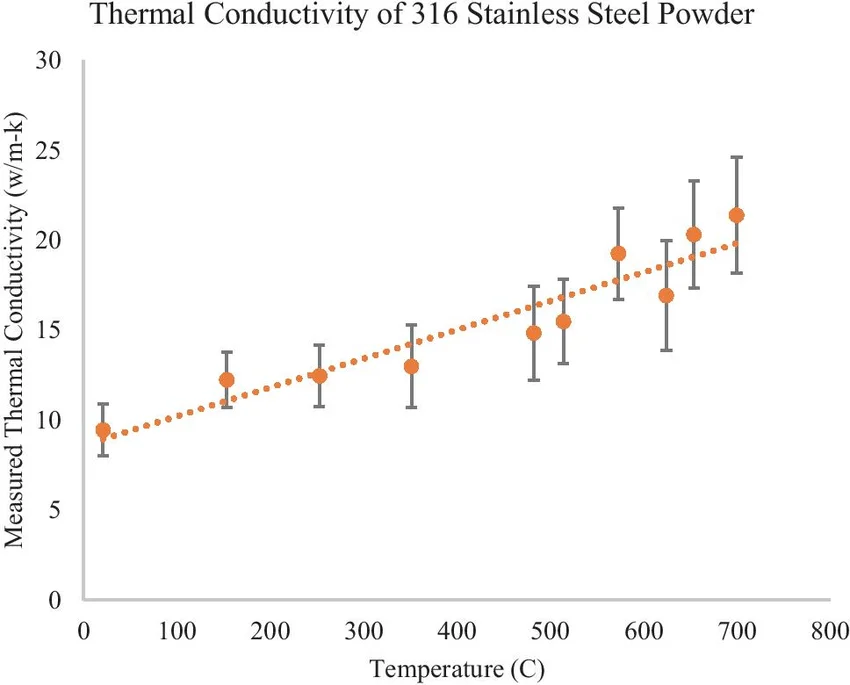
Like all good designs, Lotus started with constraints: the maximum chamber pressure that could be reasonably provided by the test stands, build volume and resolution of the SLM125, and which propellants and powders were allowed on campus to name a few. Perhaps the most impactful of which were the printable material and build height. While stainless steel is not the most common material choice due to its lower conductivity, it is not unheard of as Sutton explains. Then, the limited build height of this current printer can be addressed via flanges and sealing at the point where the nozzle becomes cylindrical (inspired by work from other university teams).
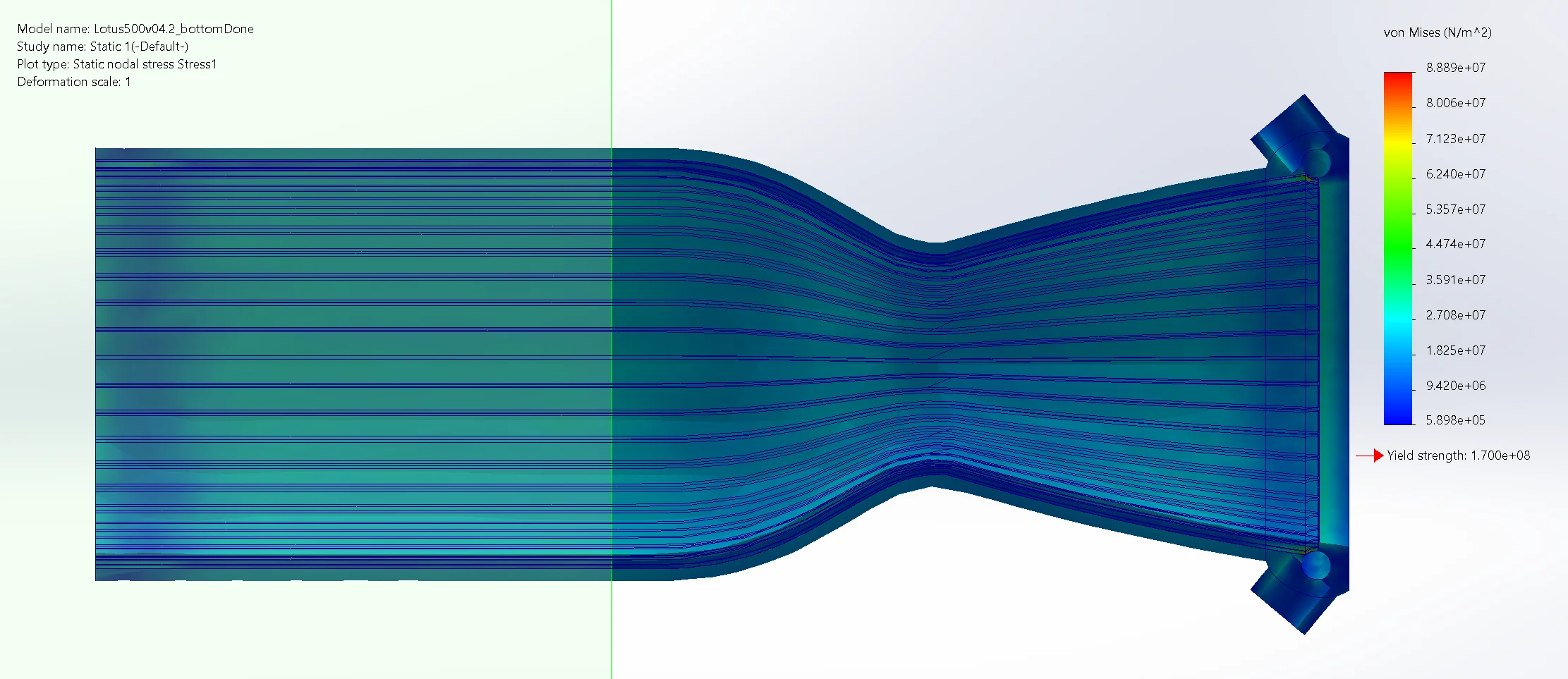
With those parameters set, the software Rocket Propulsion Analysis was used to get the chamber curve and geometry as well as simulate expected temperatures under different cooling regimes. These values were used to derive max yield stresses which were then cross-checked with hand calcs of Hoop Stress and SolidWorks's FEA study feature. Positive margins of safety were achieved and temperatures indicated that the steel would not melt.
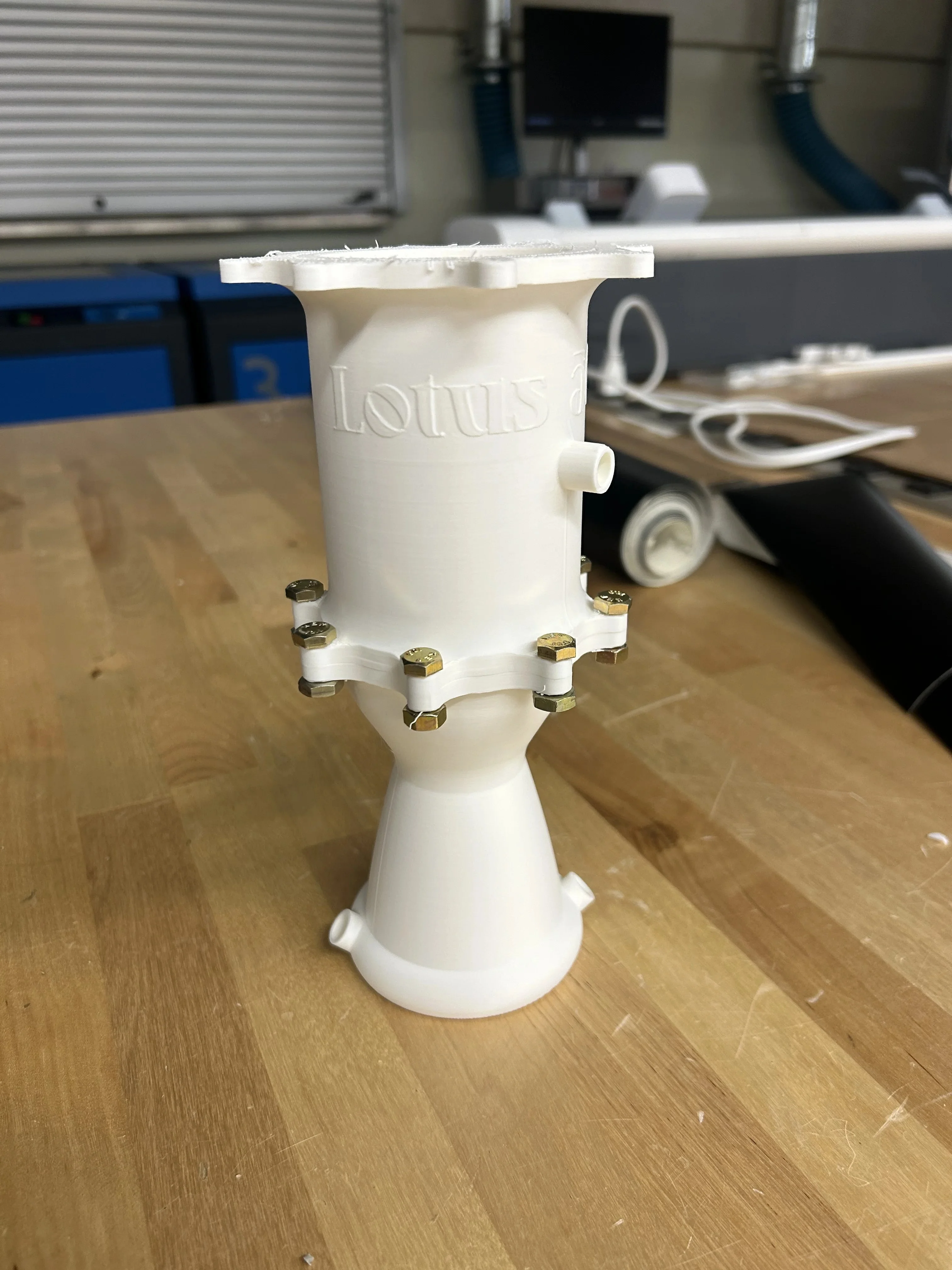
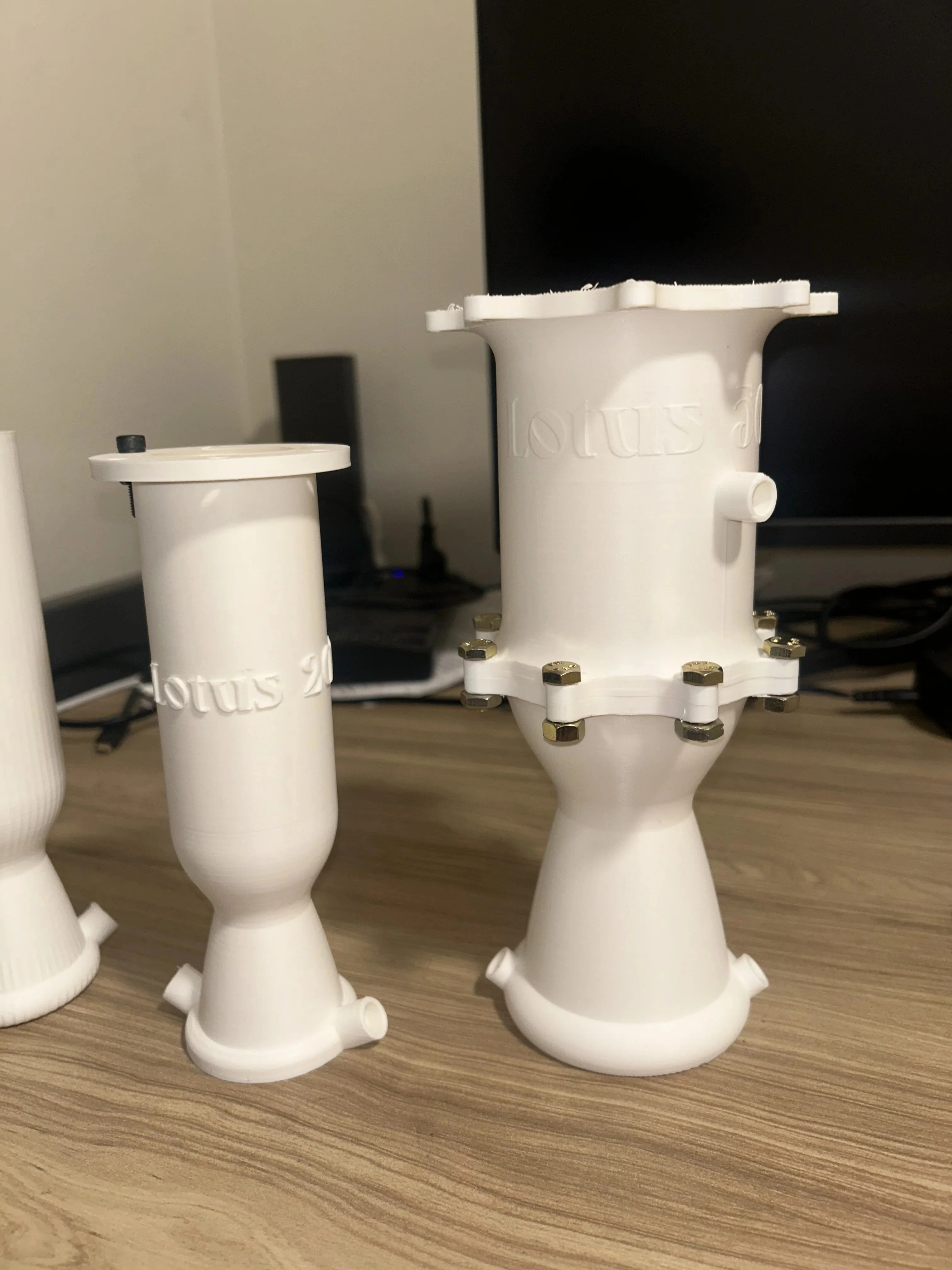
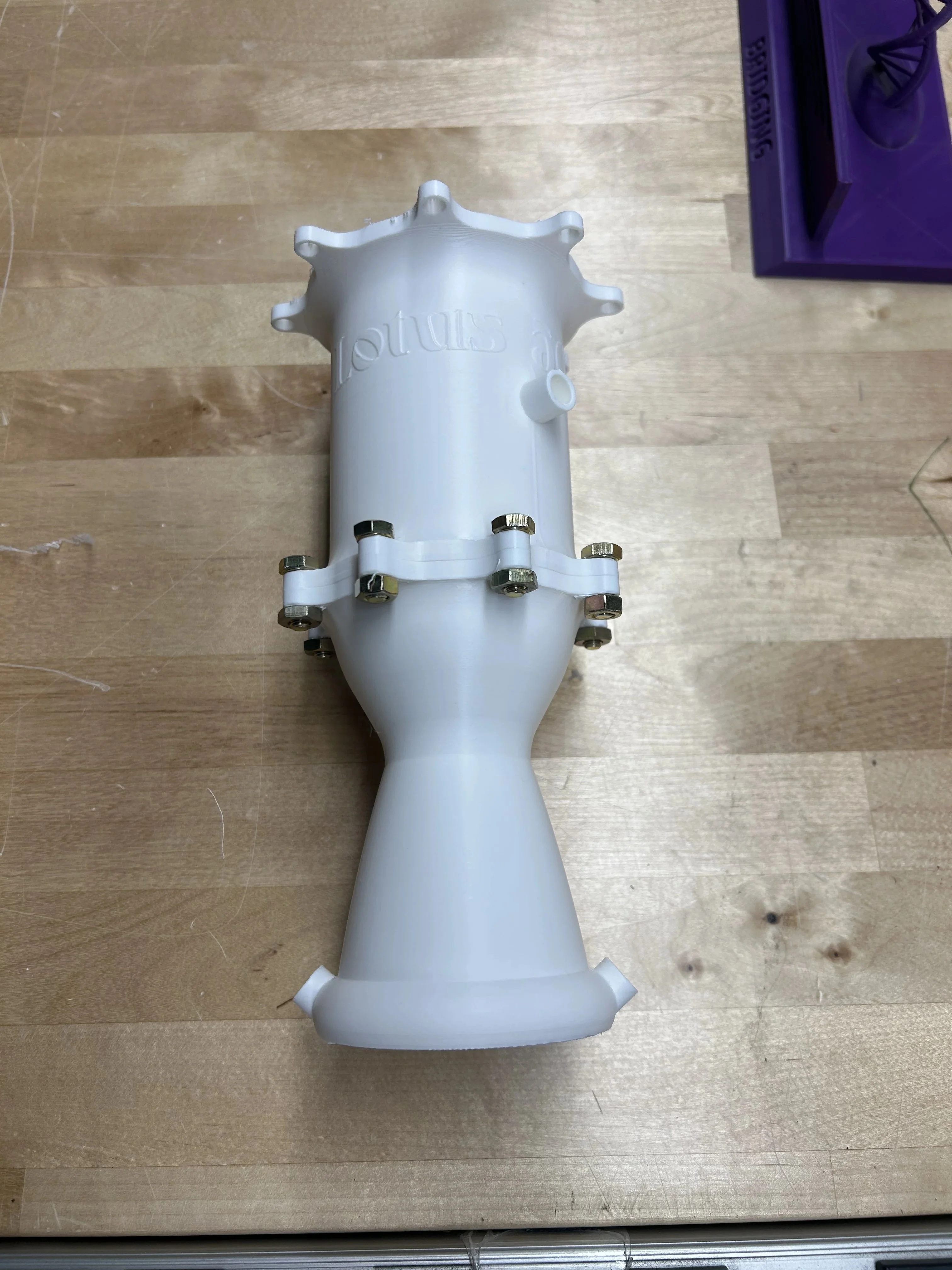
To finish of design and anlysis for the chamber and nozzle portion of the first iteration of Lotus, PLA prints were made to verify feasibility of bolt holes, npt taps, regen channels, and get a general gauge of the engine's size.
Further leveraging access to rapid printing and iteration, Lotus is being designed with different injector flavors in mind, starting with the familiar and reliable Impinging Unlike Doublet to verify chamber geometry before evloving to a throttleable pintle injector.
Current Status
Prints for the nozzle and chamber of Lotus500v05 were started at the end of the Winter 2026 quarter, but due to temperature-induced chiller issues, the second print has been delayed until repairs can be administered at the end of March.
When the next quarter begins, design work on the injector will start, all three components will have completed printing, and post-processing will begin. Extensive testing will be conducted to ensure proper propellant timing and to prevent hard starts during engine ignition.